Is it more important to focus on the best technology or the best business model?
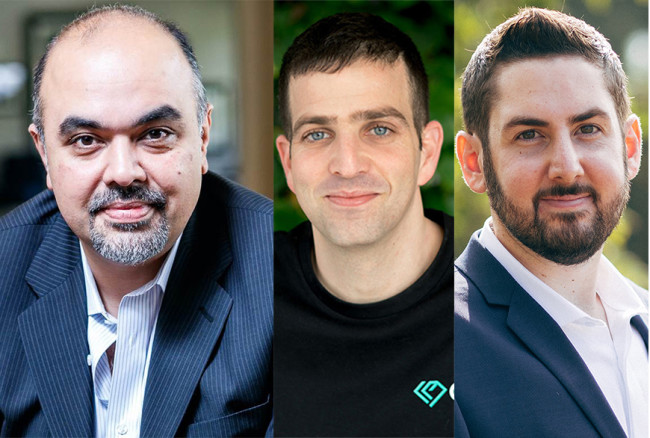
With this question Henry Chesbrough, professor at Berkeley University and the first to use the term “Open Innovation” in a book published in the 2003, constantly challenges his students. From his office in Boston, Gianfranco Zaccai perhaps would answer that a truly innovative company is one that designs and delivers the best costumer experience: Technology, product service and business model will follow as a result of that experience. It is this focus on customer experience that is central to Continuum’s business; the company was founded in 1983 by Zaccai, born in Trieste but living in the United States for a long time. Today, Continuum is a world leader in the design of new products and services. It is headquartered in Boston with offices in Los Angeles, Milan, Seoul and Shangai; 180 employees and clients like BMW, Bose, Nestle, Johnson & Johnson, PepsiCo and Samsung. Continuum has been a success story for over thirty years: In 1988 the company helped Reebok design the famous Pump shoes; in 1998 it developed the Swiffer in collaboration with Procter & Gamble; in 2008 it created a new retail store experience for Amplifon.
Jonah Lehrer, author of “Imagine,” one of the current best-selling books in the United States, devotes the book’s entire introduction to describe Continuum and its ability to imagine an ideal future and try to realize it, starting with what is currently available. This was the case of Insulet, a company founded by two professors who turned to Continuum with seed capital and an idea: Make insulin delivery easier and more compatible with the active lifestyle of diabetic patients. Together with Continuum the two professors found the right technologies and partnerships to make a product easy to use, without tubes or wires, and even waterproof. In 2010 the Omnipod Insulin Management System earned the Insulet company $97M in revenues, and scores of accolades and awards. To achieve these goals, market research is not enough. It is necessary to draw on expertise in sociology and ethnography, based on field studies, which need to address implicit or expressed user requirements.
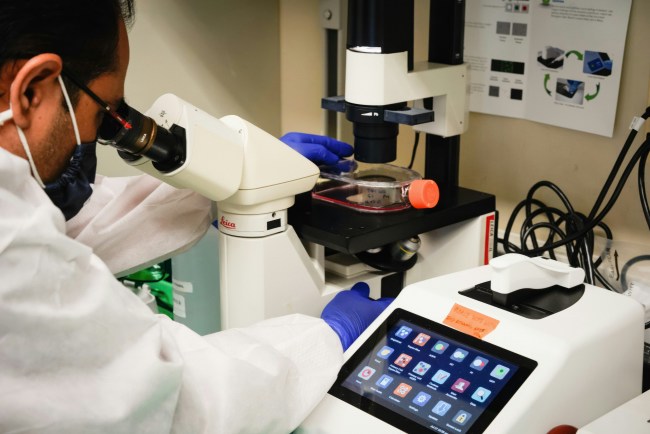
In doing so, Continuum brings to market new efficient products for consumers, which also have a positive impact on people’s live. For example, 20% of adults in South Africa are affected by HIV. The traditional testing system involve very fragile lab-based equipment, which works slowly. Not the ideal system in an environment where people live several days’ walk from the nearest clinic. In 2010 Daktari, in collaboration with Continuum, designed and built HIV testing equipment, which is compact, rugged, and transportable in a backpack, and which gives the results of the examination in just a few minutes. This way, millions of people can be tested and monitored by bringing the mobile clinic to their remote locations instead of them having to go on long journeys.
Prioritizing customer experience is fundamental not only for manufacturers but also–and especially–for companies in the service sector. Continuum’s work with hotels, hospitals, financial institutions and other businesses is about addressing the small and big problems of everyday life. This results in identifying new business opportunities and making our lives a little easier and more enjoyable.
This article was originally published in La Repubblica.